12 Best Hot Springs in Iceland: Natural Hot Springs & Geothermal Pools

09.03.2026 (Updated: 22.04.2026, 09:43)
22.04.2026


Iceland is one of the best places in the world to experience geothermal bathing. Located directly on the Mid-Atlantic Ridge, the island sits above intense volcanic activity that heats underground water and creates hundreds of geothermal areas across the country. As a result, hot springs in Iceland range from remote natural pools hidden in lava fields to modern geothermal spas with world-class facilities.
For centuries, Icelanders have used these geothermal waters for relaxation, bathing, and social gatherings. Today, visitors can enjoy everything from famous lagoons to free natural hot springs surrounded by mountains, rivers, and volcanic landscapes.
This guide explores 12 of the best hot springs in Iceland, including both natural geothermal pools and developed spa lagoons. You’ll discover where they are located, what temperatures to expect, whether they are free or paid, and which ones are best for swimming. We also include a hot springs map, typical water temperatures, and pricing information to help you plan your visit.
Whether you want to soak in a luxury lagoon or find a quiet natural pool, Iceland offers some of the most unique hot spring experiences on Earth.
Thanks to Iceland’s volcanic geology, geothermal bathing spots can be found across the entire country. Some of the most famous hot springs in Iceland are located near Reykjavík and the Golden Circle, while others are hidden in remote regions such as the Icelandic Highlands or North Iceland.
These geothermal bathing spots range from natural hot springs in rivers and mountain valleys to modern geothermal spas with restaurants, saunas, and changing facilities. While many developed lagoons charge an entrance fee, several of Iceland’s most scenic geothermal pools are completely free to visit, often requiring only a short hike to reach.
The quick overview below highlights several of the most well-known hot springs in Iceland before the detailed list that follows.
|
Hot Spring |
Type |
Region |
Temperature |
Price |
|
Blue Lagoon |
Spa |
Reykjanes |
~38°C |
$$$ |
|
Reykjadalur |
Natural |
South Iceland |
36–40°C |
Free |
|
Secret Lagoon |
Pool |
Golden Circle |
~38°C |
$$ |
|
Mývatn Nature Baths |
Spa |
North Iceland |
~36–40°C |
$$ |
Exploring Iceland’s hot springs is one of the country’s greatest adventures—but reaching them often requires some planning. Many of the best hot springs are scattered across remote valleys, rugged highlands, and open countryside. While a few are near towns or along major roads, most are best reached by car, and some require a short hike. Here’s what you need to know to access Iceland’s geothermal wonders with confidence.
For most visitors, renting a car is by far the easiest and most flexible way to reach Iceland’s hot springs. Public transportation is limited outside of Reykjavík and a few major routes, and many natural pools are located far from bus stops or tour drop-off points. Renting a car gives you the freedom to visit hot springs at your own pace, discover lesser-known spots, and enjoy the journey through Iceland’s dramatic landscapes.
Key advantages of renting a car:
Iceland’s road network includes everything from smooth highways to rough gravel tracks and highland F-roads. Here’s what to expect:
Pro tip: Always check road conditions and weather forecasts before setting out, especially if heading into the highlands or rural areas.
Most hot springs have designated parking areas, often free of charge. For developed lagoons, parking is usually right by the entrance. For natural pools, expect a short walk or hike from the parking lot—sometimes over uneven or muddy ground.
Some of Iceland’s most memorable hot springs require a hike to reach. Trail distances range from a few minutes (Seljavallalaug, Guðrúnarlaug) to 45–60 minutes (Reykjadalur). Trails can be muddy, rocky, or steep in places, so wear sturdy shoes and check weather conditions before setting out.
| Hot Spring | Vehicle Needed | Hiking Required | Seasonal Access |
|---|---|---|---|
| Blue Lagoon | 2WD | None | Year-round |
| Sky Lagoon | 2WD | None | Year-round |
| Reykjadalur | 2WD | ~1 hour (3 km / 1.8 mi) | Year-round |
| Secret Lagoon | 2WD | None | Year-round |
| Mývatn Nature Baths | 2WD | None | Year-round |
| Landmannalaugar | 4WD | Short walk | Summer only |
| Seljavallalaug | 2WD | ~20 min walk | Year-round |
| Hveravellir | 4WD | Short walk | Summer only |
| Grettislaug | 2WD (summer) | None | Year-round (weather) |
| Hvammsvík | 2WD | None | Year-round |
| Guðrúnarlaug | 2WD | Short walk | Year-round |
| Laugarás Lagoon | 2WD | None | Year-round |
In summary: Renting a car is the key to unlocking Iceland’s hot springs, from iconic lagoons to wild, hidden pools. Plan your route, check conditions, and enjoy the freedom to explore Iceland’s geothermal treasures on your own terms.
Each hot spring in the list below includes its own “Access and Directions” section for detailed, site-specific guidance.
Iceland is home to hundreds of geothermal bathing spots, but a handful stand out for their scenery, accessibility, and unique bathing experience. The best hot springs in Iceland include a mix of luxury geothermal lagoons, historic swimming pools, and natural geothermal rivers hidden in volcanic landscapes. Some are easily accessible near Reykjavík, while others require a short hike or a journey into the highlands.
Below are 12 of the most popular and scenic hot springs in Iceland, including both famous geothermal spas and natural pools where you can soak in warm geothermal water surrounded by nature.
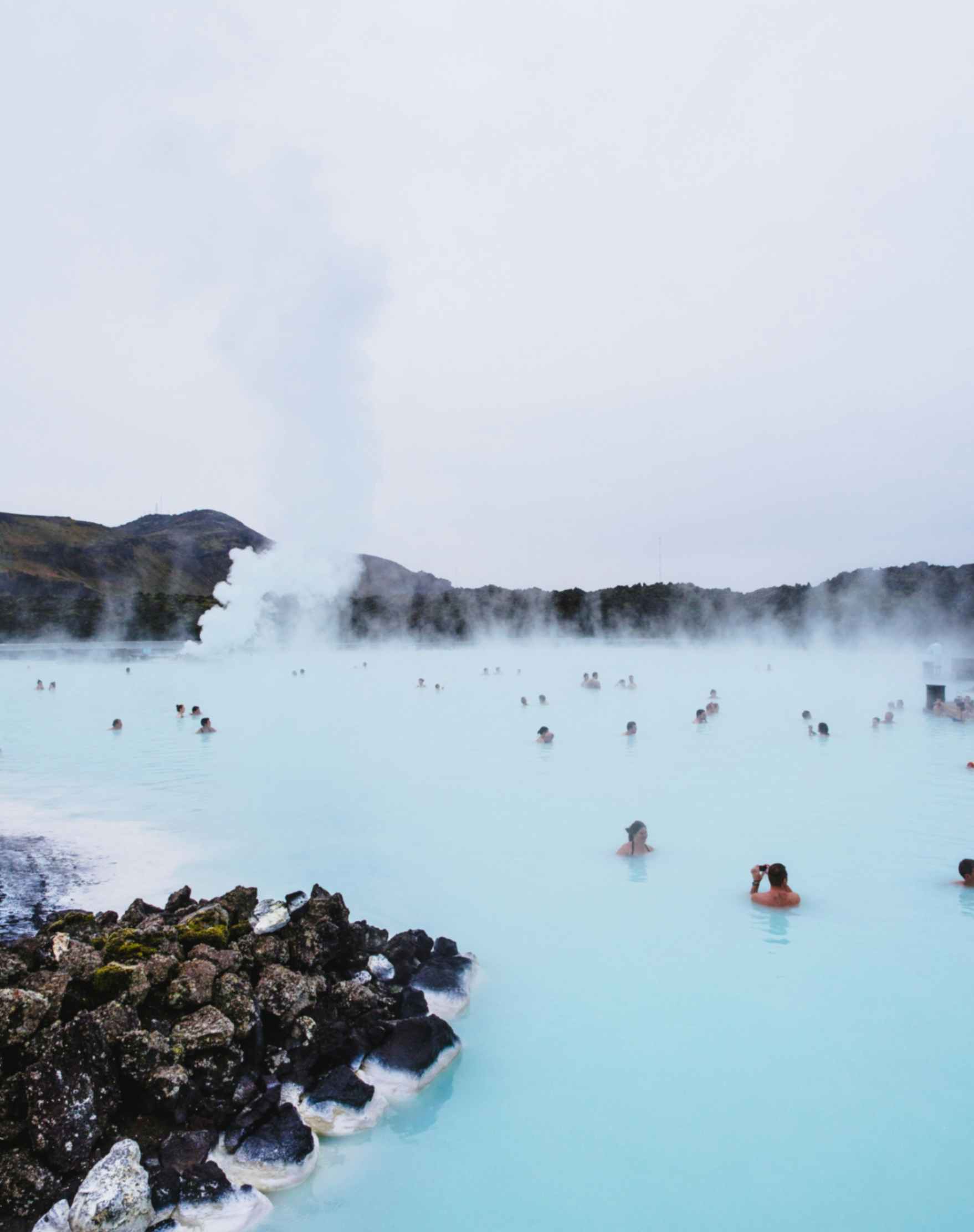
The Blue Lagoon is the most famous geothermal spa in Iceland, known for its milky blue water surrounded by black lava fields. The lagoon is fed by mineral-rich geothermal water containing silica and algae, which give it its distinctive color and skin-soothing properties. Visitors can relax in the warm water, enjoy silica mud masks, or visit the spa and restaurants located on-site. Thanks to its location between Keflavík Airport (KEF) and Reykjavík, the Blue Lagoon is often the first or last stop on an Iceland itinerary.
The Blue Lagoon is renowned for its extensive amenities, including modern changing rooms, private showers, secure lockers, and on-site towel and robe rentals. The facility also features a swim-up bar, in-water silica mask stations, multiple restaurants, a café, and a dedicated spa area offering treatments. These world-class amenities ensure a comfortable and luxurious experience for all visitors.
The Blue Lagoon is located on the Reykjanes Peninsula, about 45 minutes by car from Reykjavík and just 20 minutes from Keflavík International Airport. The lagoon is easily accessible via paved roads suitable for all vehicles. Most visitors drive themselves, but regular shuttle buses run from both Reykjavík and the airport. Parking is ample and located a short walk from the entrance. Reservations are required, so book your time slot in advance.
Combine your visit with a walk through the Reykjanes Peninsula’s volcanic landscapes, visit the dramatic Gunnuhver geothermal area, or explore the Bridge Between Continents for a unique geological experience.
Why visit: iconic Icelandic geothermal experience with world-class spa facilities.
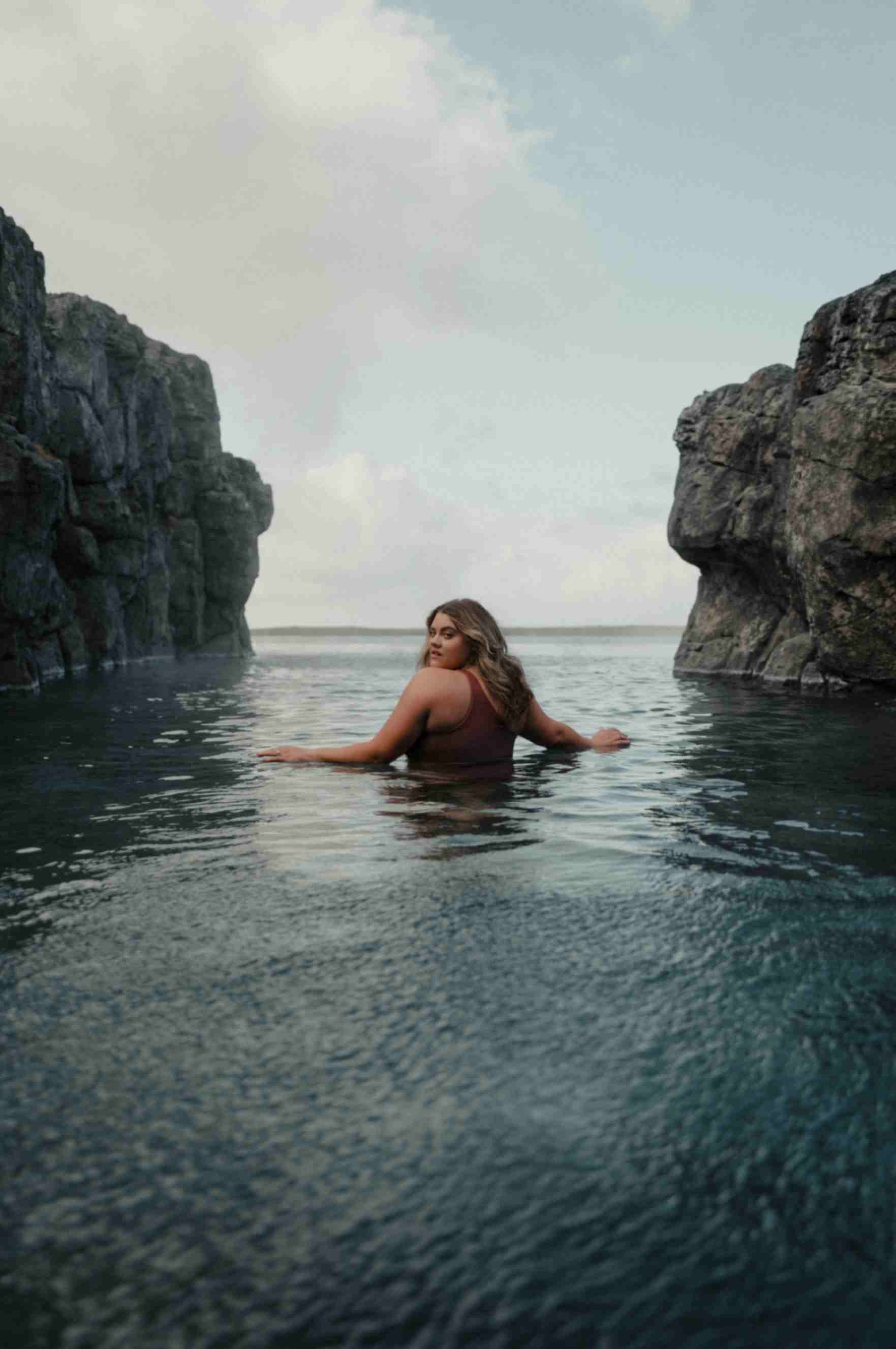
Sky Lagoon is one of Iceland’s newest geothermal spas and has quickly become one of the most scenic bathing spots near Reykjavík. The lagoon features a dramatic infinity-edge pool overlooking the North Atlantic Ocean, creating the feeling of bathing at the edge of the sea. Visitors can also experience the traditional seven-step Icelandic bathing ritual, which includes a cold plunge, sauna with ocean views, and steam room. Its modern design and coastal setting make it a popular alternative to the Blue Lagoon.
Sky Lagoon offers state-of-the-art facilities, including spacious changing rooms, private and group showers, secure lockers, and towel service. The complex features a sauna with ocean views, a cold plunge pool, and a steam room as part of its signature seven-step ritual. There is also an on-site café and bar, allowing guests to enjoy refreshments before or after their soak.
The Blue Lagoon is located on the Reykjanes Peninsula, about 45 minutes by car from Reykjavík and just 20 minutes from Keflavík International Airport. The lagoon is easily accessible via paved roads suitable for all vehicles. Most visitors drive themselves, but regular shuttle buses run from both Reykjavík and the airport. Parking is ample and located a short walk from the entrance. Reservations are required, so book your time slot in advance.
After relaxing at Sky Lagoon, explore Reykjavík’s vibrant city center, visit the nearby Perlan Museum for panoramic views, or stroll along the city’s coastal walking paths.
Why visit: stunning ocean views and a modern geothermal spa experience.
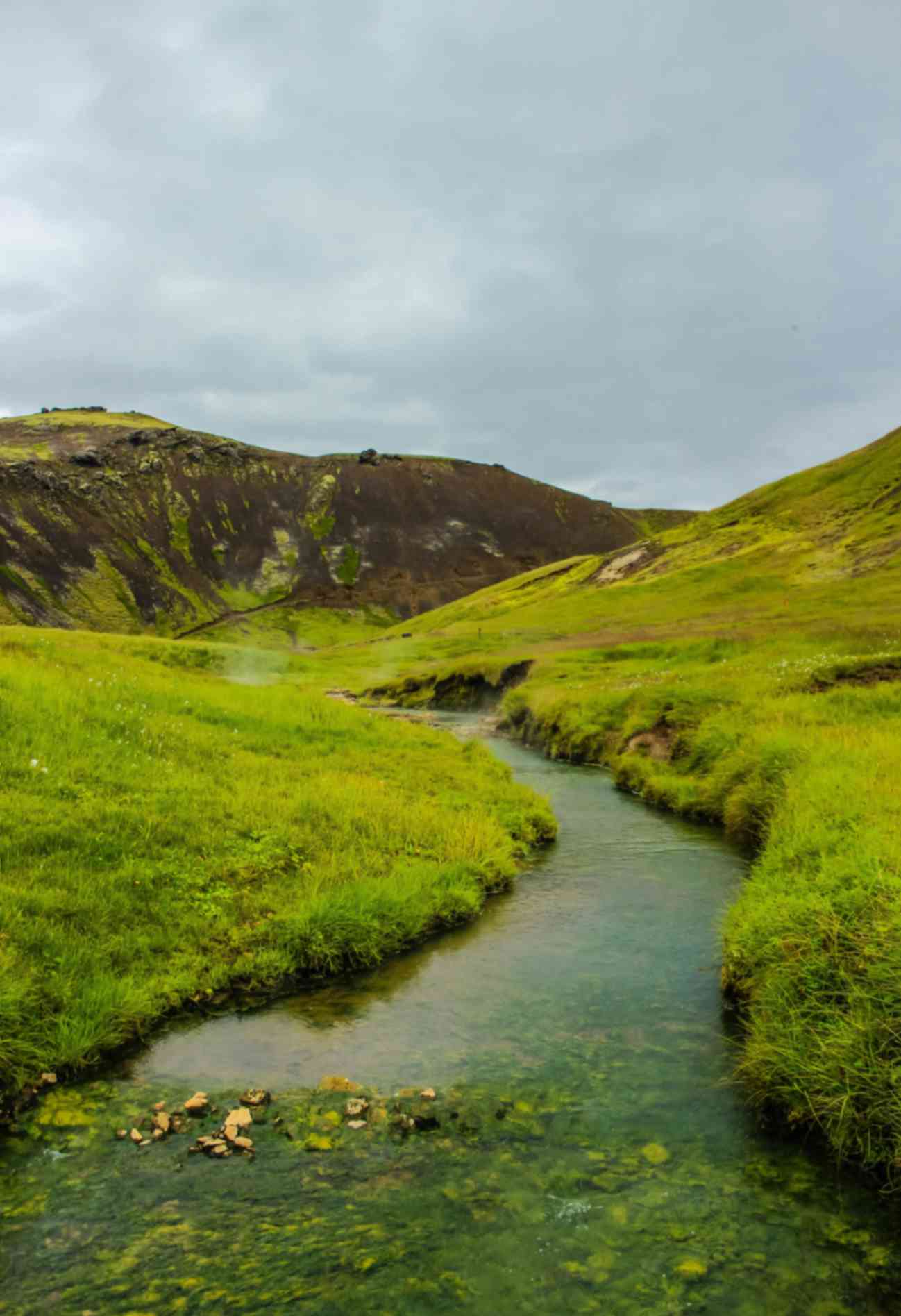
Reykjadalur is one of the most famous natural hot springs in Iceland, where visitors can soak in a naturally heated river inside a geothermal valley. Reaching the river requires a 45–60 minute hike through steaming hills, bubbling mud pots, and scenic mountain landscapes. Wooden boardwalks and small changing areas make it easier to enter the water along different sections of the river, where temperatures vary naturally. Because it’s free and relatively accessible, Reykjadalur is a favorite among both locals and travelers.
Facilities at Reykjadalur are minimal, reflecting its natural setting. There are no formal changing rooms, showers, or toilets at the river itself. Small wooden screens provide limited privacy for changing, but visitors should be prepared to change outdoors and pack out all belongings. It’s essential to bring your own towel and supplies, as there are no amenities on-site.
Reykjadalur is accessed from the town of Hveragerði, about 40 minutes’ drive from Reykjavík on paved roads (Route 1). Park at the designated lot at the trailhead on the town’s outskirts. From there, a well-marked hiking trail (about 3 km/1.8 miles each way) leads to the hot river, taking 45–60 minutes on foot. The trail has some steep and muddy sections but is manageable for most visitors in good weather. There are no public transport options directly to the trailhead; a car is recommended.
Explore the volcanic landscapes of Lake Mývatn, visit the nearby Dimmuborgir lava fields, Hverir geothermal area, and take a walk around the pseudocraters or enjoy birdwatching.
Why visit: soak in a natural geothermal river surrounded by dramatic Icelandic scenery.
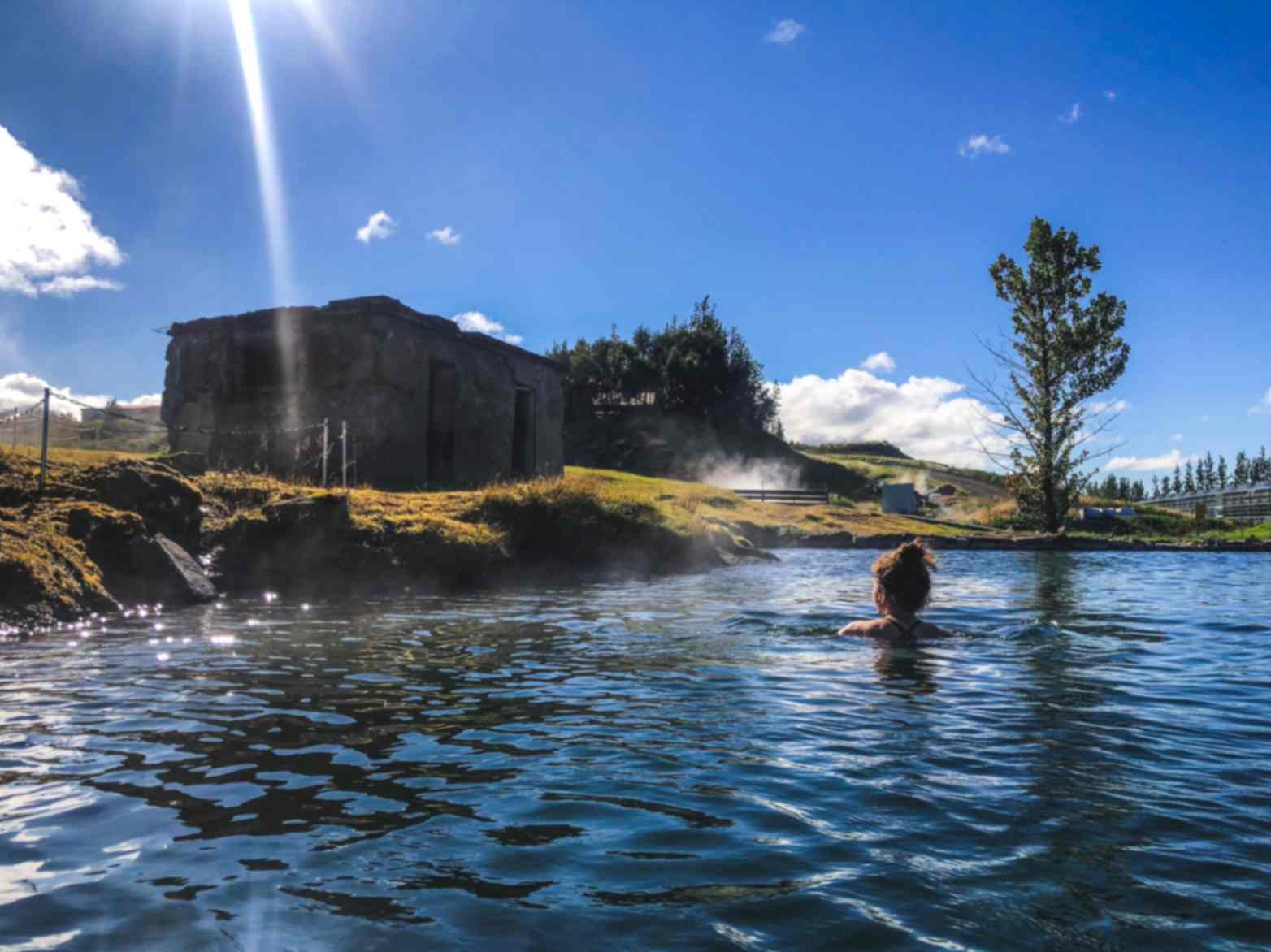
The Secret Lagoon, known locally as Gamla Laugin, is the oldest swimming pool in Iceland, dating back to 1891. Located in the small village of Flúðir along the Golden Circle, this geothermal pool offers a more traditional and relaxed bathing experience compared to larger spa lagoons. The surrounding area features small geysers, bubbling geothermal vents, and steaming hot springs that erupt regularly throughout the day. The pool itself maintains a comfortable temperature year-round, making it a great stop while exploring nearby attractions like Gullfoss and Geysir.
The Secret Lagoon features traditional bathhouse amenities, including gender-specific changing rooms, showers, and toilets. Showering before entering is mandatory, and soap is provided. There is a small café on-site serving drinks and snacks, and pool noodles are available for guest use. The facilities are well-maintained, offering a comfortable experience while retaining a historic atmosphere.
The Secret Lagoon is in the village of Flúðir, in the Golden Circle region, about 1.5 hours’ drive from Reykjavík. The route is fully paved and suitable for all vehicles. Parking is available on site, just a short walk from the entrance. The lagoon is accessible year-round, and pre-booking is recommended during busy periods. No hiking is required; the entrance is adjacent to the parking lot. Tour buses often stop here as part of Golden Circle excursions.
Explore the volcanic landscapes of Lake Mývatn, visit the nearby Dimmuborgir lava fields, Hverir geothermal area, and take a walk around the pseudocraters or enjoy birdwatching
Why visit: historic geothermal pool with a relaxed atmosphere in the Golden Circle.
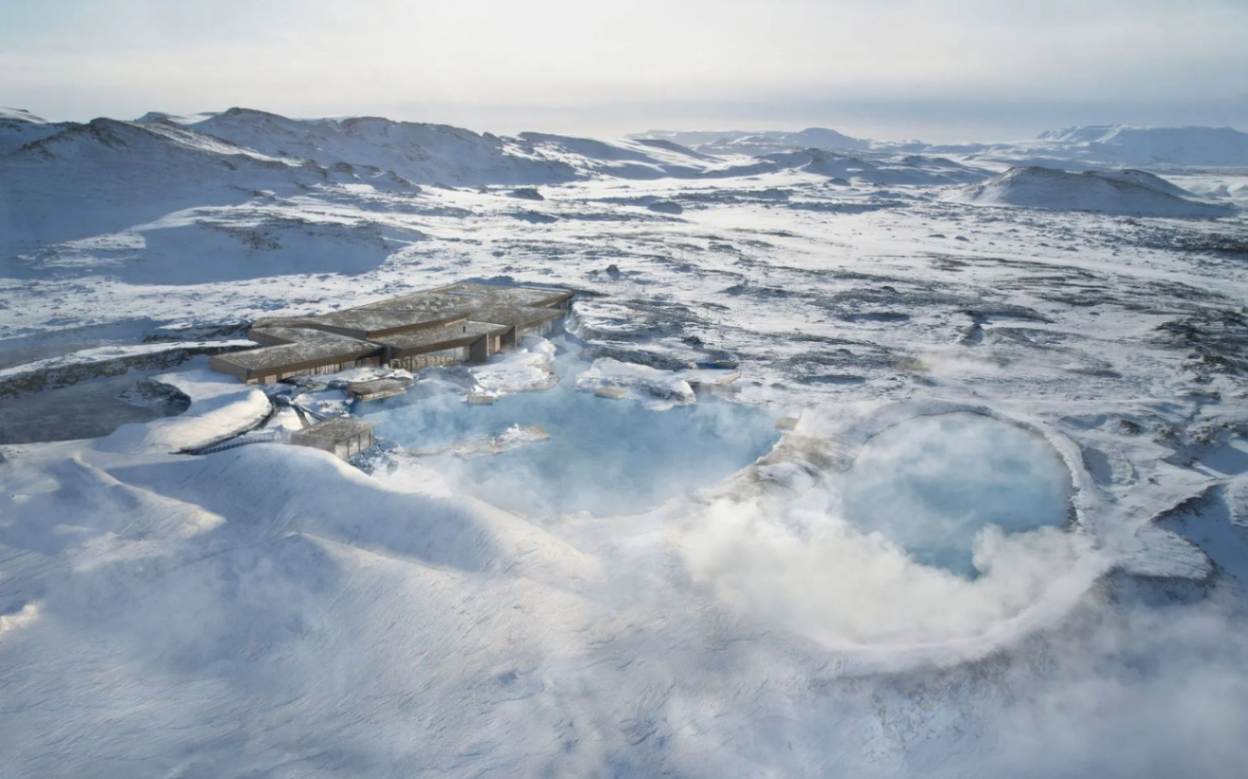
Image credit: earthlagoon
Often called the “Blue Lagoon of the North,” the Mývatn Nature Baths offer a similar geothermal spa experience but with fewer crowds and spectacular volcanic scenery. The milky-blue geothermal water is rich in minerals and heated naturally by underground geothermal activity. Visitors can relax in large outdoor pools overlooking the lava fields and Lake Mývatn, one of the most geologically active regions in Iceland. The baths also include steam rooms built directly above geothermal vents, adding to the unique experience.
Mývatn Nature Baths provide full-service amenities, including modern changing rooms, private and communal showers, secure lockers, and towel rentals. The facility also features a café with food and beverage options, steam rooms built over geothermal vents, and outdoor seating areas with panoramic views. These amenities ensure a relaxing and convenient visit for all guests.
Mývatn Nature Baths are located near Lake Mývatn in North Iceland, about a 10-minute drive from the village of Reykjahlíð and just off the Ring Road (Route 1). The route is paved and suitable for all vehicles. Ample parking is available right by the entrance. The baths are open year-round and are easy to reach by car. Public buses occasionally serve the Mývatn area, but driving is the most convenient option. Advance booking is recommended, especially during peak travel seasons.
Explore the volcanic landscapes of Lake Mývatn, visit the nearby Dimmuborgir lava fields, Hverir geothermal area, and take a walk around the pseudocraters or enjoy birdwatching.
Why visit: relaxing geothermal spa surrounded by dramatic volcanic landscapes in North Iceland.
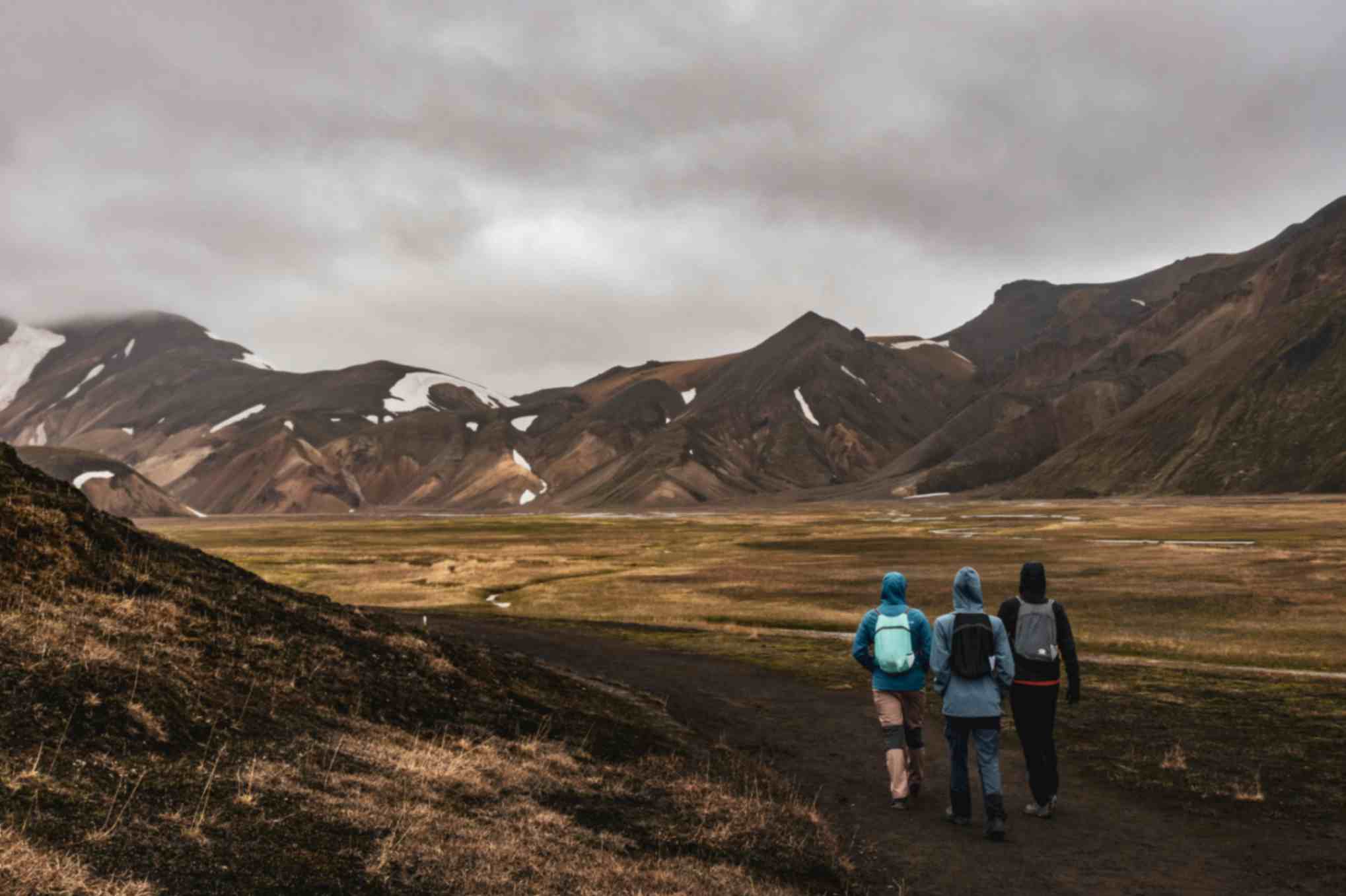
The hot springs at Landmannalaugar are among the most scenic natural hot springs in Iceland, located deep in the Icelandic Highlands. The warm geothermal pool sits beside a mountain stream, where hot and cold water mix to create perfect bathing temperatures. Visitors can soak while surrounded by colorful rhyolite mountains, lava fields, and dramatic highland landscapes. Landmannalaugar is also the starting point of the famous Laugavegur hiking trail, making the hot spring a popular place to relax after a long hike. Access typically requires driving Iceland’s highland F-roads during summer.
At Landmannalaugar, visitors will find basic but adequate facilities at the nearby campsite, including communal changing rooms, showers (day-use fee required), and toilets. There are no amenities directly at the hot spring itself; guests must use the facilities at basecamp before or after bathing. There is also a small shop and information center at the campsite.
Landmannalaugar is situated in the Icelandic Highlands and is accessible only during summer (typically late June to early September) due to highland road conditions. Reaching Landmannalaugar requires driving on F-roads (mountain roads), which are gravel and may involve river crossings. A high-clearance 4WD vehicle is mandatory. There are several routes in, with the northern F208 being the most popular. Parking is available at the Landmannalaugar campsite, a short walk from the hot springs. Scheduled highland buses also run from Reykjavík and other towns during summer.
Take advantage of the area’s renowned hiking trails, including the Laugavegur Trail and Bláhnúkur Mountain. The region is famous for its colorful rhyolite mountains and lava fields.
Why visit: a stunning natural hot spring set in Iceland’s colorful highland wilderness.
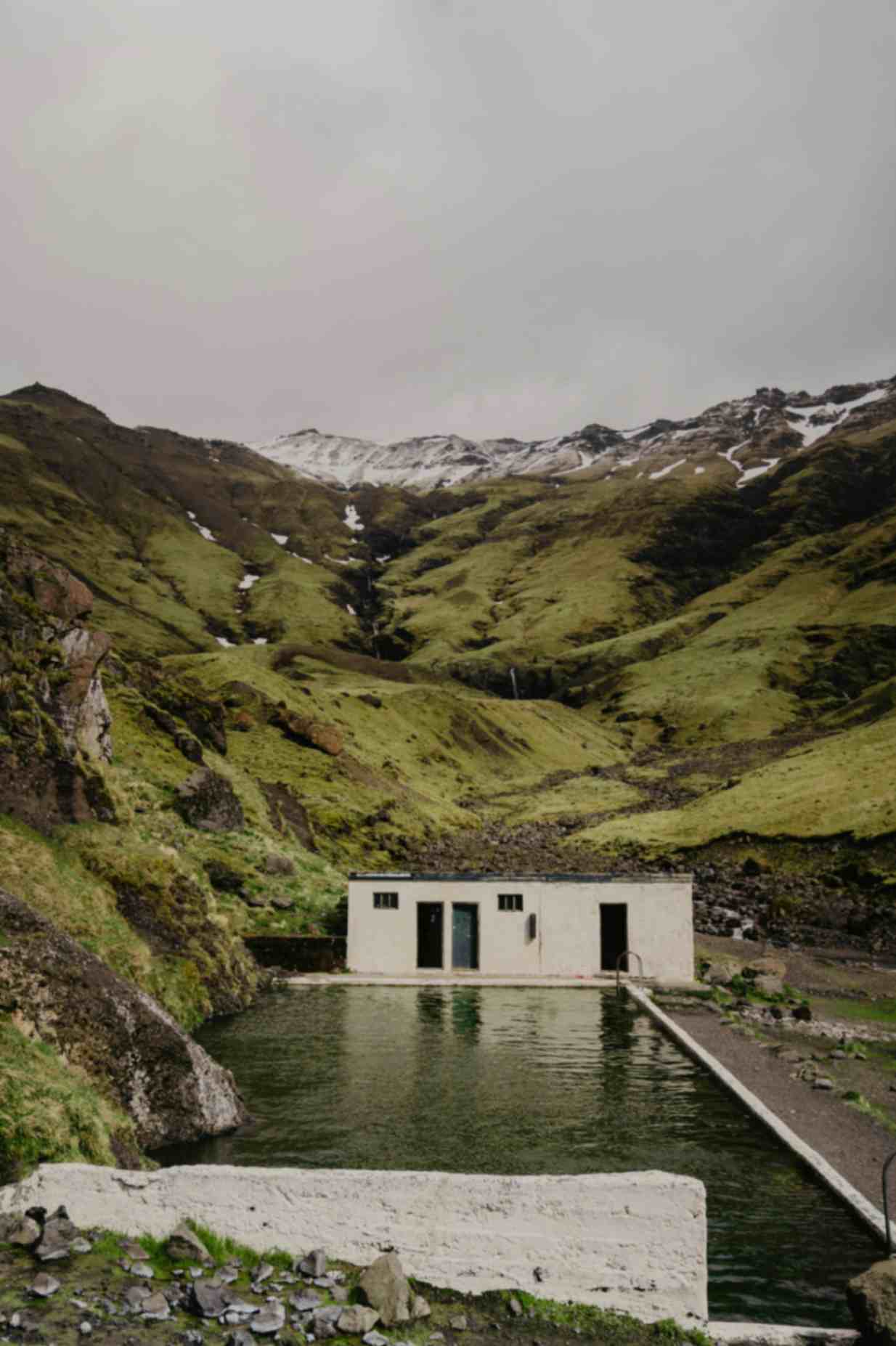
Seljavallalaug is one of the most scenic historic hot spring pools in Iceland, tucked into a narrow valley beneath steep mountains on the country’s south coast. Built in 1923, it is one of the oldest swimming pools in Iceland and was originally used for teaching locals how to swim. The pool is fed by a small geothermal stream that keeps the water pleasantly warm, though slightly cooler than some other hot springs. Reaching Seljavallalaug requires a short 15–20 minute walk from the parking area along a rocky path.
Seljavallalaug offers very basic facilities: an old changing room with minimal privacy and no showers or toilets. The changing hut is rustic and may not always be clean. Visitors should bring their own towels and be prepared for a simple, no-frills experience.
Landmannalaugar is situated in the Icelandic Highlands and is accessible only during summer (typically late June to early September) due to highland road conditions. Reaching Landmannalaugar requires driving on F-roads (mountain roads), which are gravel and may involve river crossings. A high-clearance 4WD vehicle is mandatory. There are several routes in, with the northern F208 being the most popular. Parking is available at the Landmannalaugar campsite, a short walk from the hot springs. Scheduled highland buses also run from Reykjavík and other towns during summer.
Visit the nearby Skógafoss and Seljalandsfoss waterfalls, or hike in the scenic Seljavellir valley. The south coast offers black sand beaches and glacier tours within a short drive.
Why visit: a historic mountain pool surrounded by dramatic south coast landscapes.
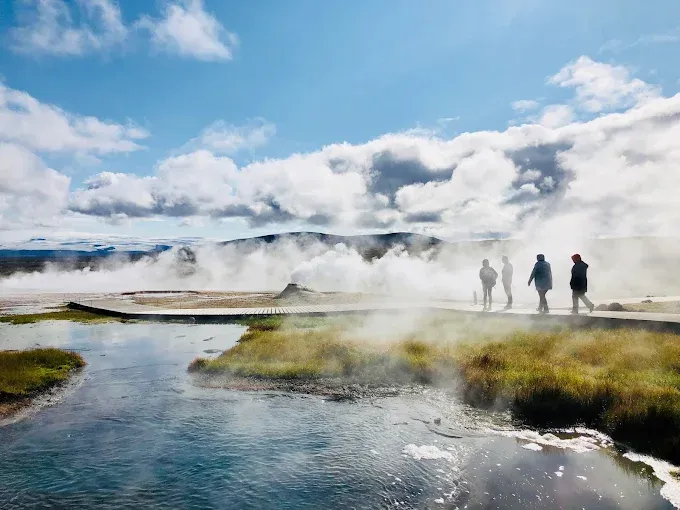
Image credit: Torgen
Hveravellir is a remote geothermal oasis located along the Kjölur highland route between Iceland’s two largest glaciers, Langjökull and Hofsjökull. The natural hot spring pool sits within a steaming geothermal field filled with fumaroles, hot springs, and colorful mineral deposits. Visitors can relax in the warm water while enjoying expansive views of the rugged highland wilderness. A nearby mountain hut and campsite make Hveravellir a popular overnight stop for travelers crossing the interior of Iceland during the summer months.
Hveravellir provides uncovered exterior changing spaces near the hot spring and access to basic facilities at the nearby mountain hut and campsite, including toilets and a small restaurant. There are no indoor showers at the hot spring itself, but the site offers a rustic, communal experience with essential amenities close by.
Hveravellir is found along the Kjölur (F35) highland route between Langjökull and Hofsjökull glaciers. Access is only possible in summer, and a 4WD vehicle is required for the gravel F35 road. The drive from Reykjavík takes about 4–5 hours. There is a parking area next to the Hveravellir mountain hut and campsite, just a short walk from the hot spring pool. Highland buses occasionally run this route in summer, but self-driving offers the most flexibility.
Explore the Hveravellir Nature Reserve, hike local trails between glaciers, or visit the geothermal field with bubbling vents and fumaroles. The site is a popular stop on highland crossing routes.
Why visit: soak in a geothermal pool surrounded by one of Iceland’s most dramatic highland landscapes.
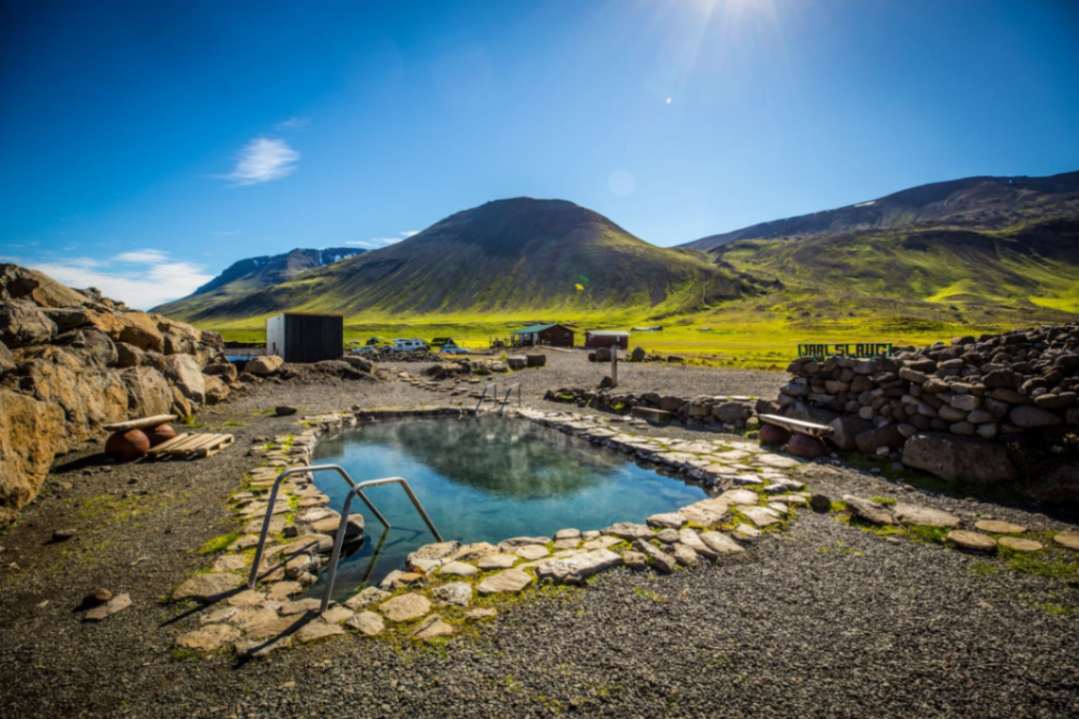
Image credit: northiceland
Grettislaug is a historic seaside hot spring in North Iceland, located along the Skagafjörður coastline with views toward the island of Drangey. The stone pool sits just above the ocean and is filled with naturally heated geothermal water. According to Icelandic folklore, the spring is named after Grettir the Strong, a legendary Viking outlaw who is said to have swum to shore here after escaping from Drangey Island. Today the site includes two pools and simple facilities, offering a relaxing geothermal soak with panoramic coastal scenery.
Grettislaug features simple on-site facilities, including basic changing rooms and toilets. There are no showers, but the area is maintained and provides a rustic, authentic atmosphere. Visitors should bring their own towels and supplies.
Grettislaug is located on the Skagafjörður coast in North Iceland, about 30 km north of the town of Sauðárkrókur. The route is mostly paved, with the last few kilometers on a gravel road suitable for most vehicles in summer. Parking is available on site, near the pools. The site is accessible year-round, weather permitting, but winter conditions may affect the gravel road. No public transportation is available; visitors need a car to reach Grettislaug.
Enjoy coastal views of Skagafjörður, visit the historic Drangey Island (accessible by boat tours), or explore the turf houses and folk museums in the region.
Why visit: a scenic oceanfront hot spring connected to Icelandic saga history.
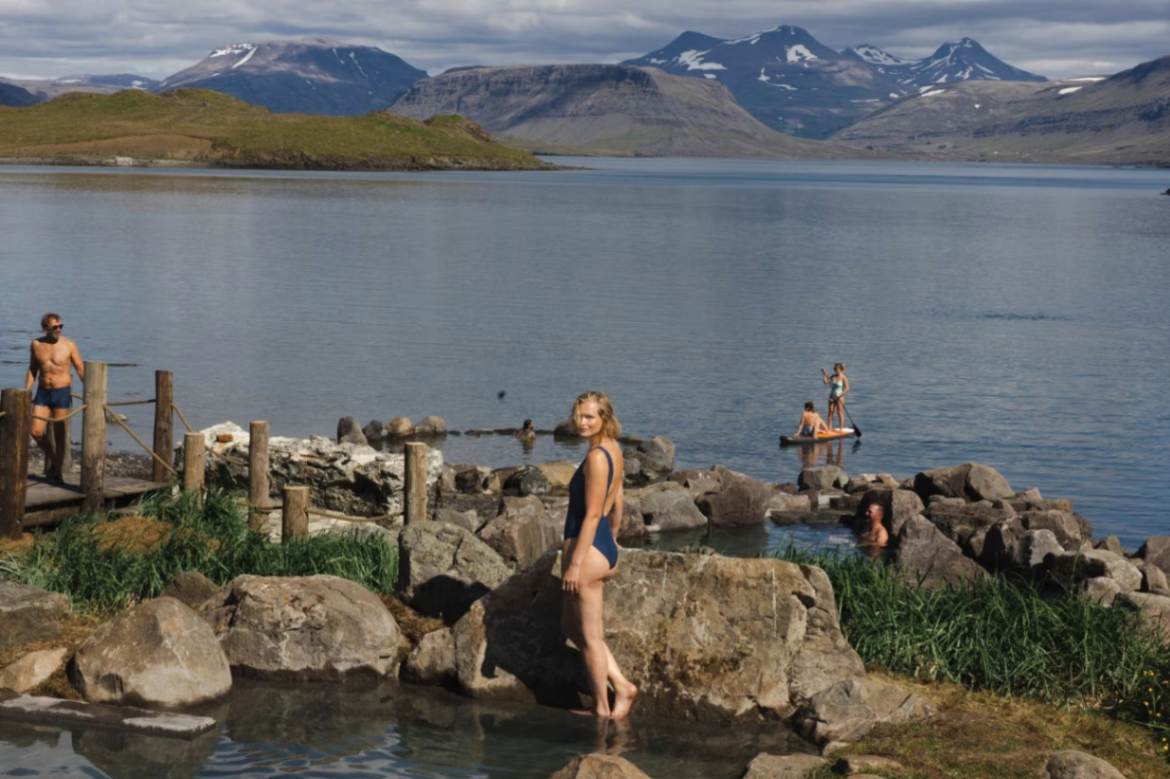
Image credit: Icelandia
Hvammsvík Hot Springs is a collection of natural geothermal pools located along the shoreline of Hvalfjörður fjord, about 45 minutes from Reykjavík. The pools are built into the natural landscape and filled with geothermal water that mixes with the surrounding sea, creating temperatures that vary slightly depending on the tide. Visitors can relax in several pools of different sizes while enjoying panoramic views of mountains and the fjord. The site also includes modern facilities, including saunas and changing areas, making it one of Iceland’s most scenic nature-integrated geothermal spas.
Hvammsvík Hot Springs offers modern amenities, including new changing rooms, showers, saunas, and a restaurant. The day-pass entry includes access to all pools, a steam room, and beach areas. Paddle boards are available for guest use, and the facility is designed for comfort and convenience.
Hvammsvík Hot Springs are located in Hvalfjörður fjord, about 45 minutes’ drive from Reykjavík on paved roads. The route is suitable for all vehicles and follows the scenic Hvalfjörður fjord road. Parking is available on site, right by the entrance. The hot springs are open year-round, and advance booking is recommended. There are no public transport options; a car is required for access.
Combine your soak with a scenic drive around Hvalfjörður fjord, hike to the Glymur waterfall (Iceland’s second tallest), or explore the black sand beaches and WWII relics in the area.
Why visit: bathe in natural hot spring pools with stunning fjord and mountain views.
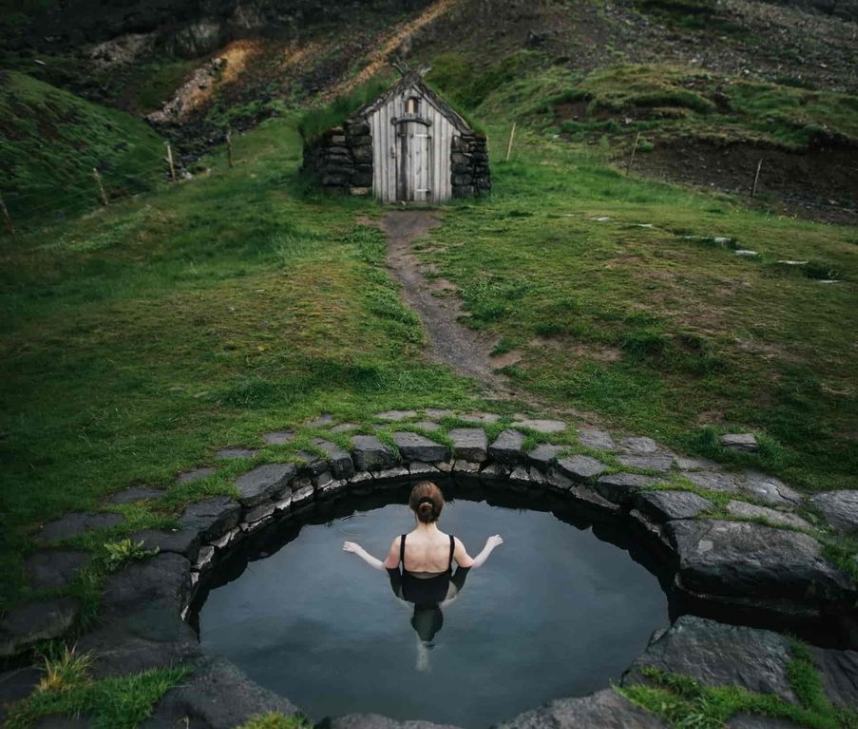
Image credit: Icelandtravelguide
Guðrúnarlaug is a small reconstructed historic hot spring pool in West Iceland, connected to the medieval Icelandic sagas. According to legend, the pool was used by Guðrún Ósvífursdóttir, a central character in the Laxdæla Saga. The original pool was destroyed during road construction but was carefully rebuilt in 2009 using traditional stonework. Today, the circular stone pool sits beside a small turf-roof changing hut, creating an atmospheric bathing spot that feels deeply rooted in Iceland’s past.
Guðrúnarlaug features a small, turf-roofed changing hut next to the pool, offering privacy for changing clothes. There are no showers or toilets on-site, but the changing hut adds to the historic ambiance and provides basic shelter for visitors.
Guðrúnarlaug is located near Laugar in Sælingsdalur in West Iceland, about a 2-hour drive from Reykjavík. Take Route 1 north, then turn onto Route 60 and follow signs toward Búðardalur. The pool is just off the main road, with a small parking area a short walk from the hot spring and turf-roof changing hut. The route is paved and suitable for all vehicles. Guðrúnarlaug is accessible year-round, but winter conditions may affect driving in the area. There is no public transportation; a car is required.
Visit the nearby Eiríksstaðir (the reconstructed home of Erik the Red), hike local trails in Sælingsdalur, or explore the Westfjords gateway town of Búðardalur.
Why visit: a peaceful geothermal soak tied to Icelandic saga history.
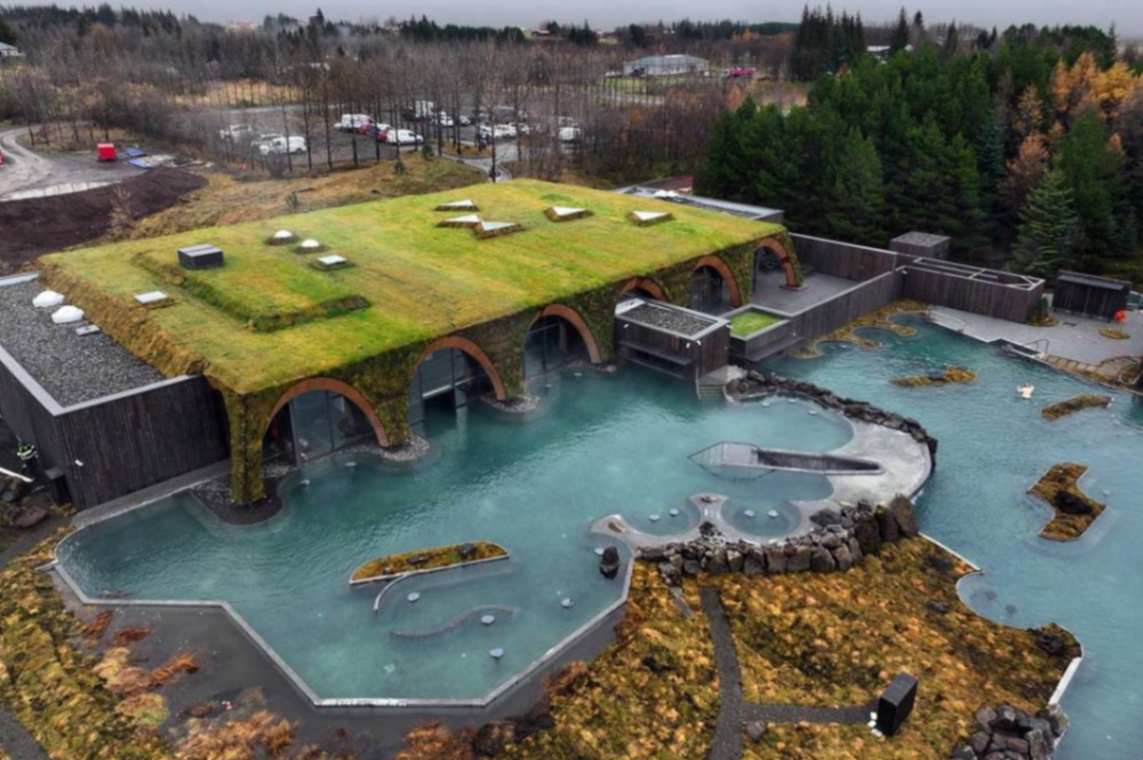
Image credit: MBL (Iceland monitor)
Laugarás Lagoon is one of Iceland’s newest geothermal spa developments, opening in 2025 in the small riverside village of Laugarás near the Golden Circle. The lagoon features modern geothermal pools designed to blend with the surrounding landscape and views over the Hvítá river. Visitors can relax in warm mineral-rich water while enjoying contemporary spa facilities, including saunas, relaxation areas, and dining options. Its location close to major Golden Circle attractions makes it an appealing stop for travelers looking for a quieter alternative to some of Iceland’s more famous lagoons.
As one of Iceland’s newest geothermal spas, Laugarás Lagoon is designed with contemporary amenities in mind, including spacious changing rooms, showers, saunas, relaxation areas, and a café or restaurant. These facilities ensure a comfortable and modern spa experience for all visitors.
Laugarás Lagoon is located in the village of Laugarás in the Golden Circle region, about 1.5 hours’ drive from Reykjavík on paved roads. Follow Route 1 east, then take Route 35 and Route 30 toward Laugarás. Parking is available on site, adjacent to the lagoon entrance. The lagoon is easy to access by car and is open year-round.
Take a short drive to the Golden Circle’s main attractions (Gullfoss, Geysir, Þingvellir), visit the local Laugarás zoo and petting farm, or enjoy riverside walks along the Hvítá river.
Why visit: a modern geothermal spa experience in the heart of Iceland’s Golden Circle region.
One of the most unique experiences when traveling in Iceland is visiting free natural hot springs. Unlike developed geothermal spas that charge an entrance fee, many natural hot springs in Iceland are completely free to access and located in scenic geothermal areas across the country. These pools are heated naturally by underground geothermal activity and often sit in remote valleys, lava fields, or mountain landscapes.
Some of the most popular free hot springs in Iceland require a short hike to reach, adding to the adventure. One of the best known is Reykjadalur Hot Spring River in South Iceland, where visitors can soak in a naturally heated river after a hike through a geothermal valley. Landmannalaugar in the Icelandic Highlands offers another incredible bathing spot surrounded by colorful rhyolite mountains. Other accessible free pools include Seljavallalaug, a historic mountain pool built in 1923, and Guðrúnarlaug, a small reconstructed hot spring linked to Icelandic saga history.
Because these pools are part of the natural environment, visitors should always respect the landscape and follow basic safety guidelines when bathing in geothermal areas.
|
Free Hot Spring |
Region |
Access |
|
Reykjadalur |
South Iceland |
~1 hour hike |
|
Seljavallalaug |
South Iceland |
~20 minute walk |
|
Guðrúnarlaug |
West Iceland |
Short walk |
Pro tip: Check the weather conditions before starting your hike/walk to a hot spring in Iceland.
Experiencing Iceland’s hot springs is a privilege—and with that comes a responsibility to protect these unique environments and respect local customs. As the popularity of geothermal bathing grows, it’s more important than ever for visitors to act thoughtfully to preserve these natural wonders for future generations.
Icelanders take bathing culture seriously, and following proper etiquette is expected at all hot springs and pools:
Iceland’s geothermal areas are incredibly fragile. Even a small amount of carelessness can cause lasting damage. To protect these special places:
Overcrowding and irresponsible behavior have already led to the closure of several hot springs in Iceland. By practicing good etiquette and environmental responsibility, you help ensure these remarkable places remain clean, safe, and open for everyone to enjoy.
Hot springs are found all across Iceland, from easily accessible geothermal spas near Reykjavík to remote natural pools in the country’s rugged highlands. Because Iceland sits on an active geothermal zone, warm geothermal water surfaces in many regions, creating bathing spots surrounded by volcanoes, lava fields, mountains, and coastal landscapes. Exploring hot springs across different parts of the island allows travelers to experience a wide variety of geothermal environments.
Some of the most famous Iceland hot springs near Reykjavík are easy to reach from the capital. These include the Blue Lagoon on the Reykjanes Peninsula, the oceanfront Sky Lagoon, and the Reykjadalur Hot Spring River, which requires a scenic hike through a geothermal valley.
The popular Golden Circle route also features several geothermal bathing spots, including the historic Secret Lagoon in Flúðir and the newly opened Laugarás Lagoon. Learn more about via our Ultimate Golden Circle guide.
In the north, visitors can relax in the Mývatn Nature Baths overlooking volcanic landscapes or visit the seaside hot spring Grettislaug along the Skagafjörður coast.
For a more remote adventure, the highlands offer natural geothermal pools such as Landmannalaugar and Hveravellir, both surrounded by dramatic wilderness scenery.
The temperature of hot springs in Iceland typically ranges between 36°C and 40°C (97–104°F), which is ideal for comfortable bathing. These warm temperatures are created by geothermal heat from volcanic activity beneath the Earth’s surface. Groundwater is naturally heated underground and then rises to the surface through geothermal areas, forming the hot springs and geothermal pools found across the country.
Temperatures can vary depending on how much geothermal water mixes with colder groundwater or nearby rivers. In some natural hot springs, the water may be slightly cooler or warmer depending on rainfall, seasonal conditions, or where the geothermal water enters the pool.
|
Type |
Average Temperature |
|
Natural hot springs |
36–40°C |
|
Geothermal spas |
37–39°C |
|
Extremely hot springs |
45°C+ |
Some geothermal pools can exceed 45°C, which is too hot and potentially dangerous for bathing. For safety, visitors should always test the water temperature before entering natural hot springs.
Visiting hot springs is one of the most memorable experiences in Iceland, but there are a few important customs and practical tips to know before you go. Understanding local bathing etiquette and preparing for Iceland’s changing weather will help ensure a comfortable and respectful visit.
In Iceland, showering before entering hot springs or swimming pools is mandatory. Visitors are expected to wash thoroughly without swimwear before entering the water. This rule is strictly followed across the country and helps keep geothermal pools clean without excessive chemicals. Most geothermal spas provide clearly marked shower areas and instructions for visitors.
Packing a few essential items will make your hot spring visit much easier and more comfortable. Recommended items include:
Some larger geothermal spas provide towels or rentals, but for natural hot springs it’s best to bring your own gear. Learn more about what to wear in Iceland for specific activites like Hot Springs.
Hot springs can be enjoyed year-round, and each season offers a different experience. In winter, soaking in warm geothermal water while surrounded by snow creates a magical atmosphere, and you may even see the Northern Lights overhead. During summer, the midnight sun allows visitors to enjoy hot springs late into the evening with extended daylight and milder weather.

Iceland has hundreds of hot springs and geothermal bathing spots spread across the island. Because the country sits on an active volcanic zone along the Mid-Atlantic Ridge, geothermal heat rises to the surface in many areas. Some hot springs are developed into spa lagoons and public pools, while many others remain natural geothermal pools found in valleys, lava fields, and the Icelandic Highlands.
The Blue Lagoon is the most famous hot spring in Iceland. Located on the Reykjanes Peninsula near Keflavík Airport, this geothermal spa is known for its milky blue water, mineral-rich silica, and modern wellness facilities. It has become one of the country’s most iconic attractions.
Many hot springs in Iceland are natural, created when geothermal water heated underground rises to the surface. However, some of the most popular bathing locations are developed geothermal spas where natural hot water is collected into pools with facilities such as changing rooms and saunas.
Most Iceland hot springs range between 36°C and 40°C (97–104°F), which is ideal for bathing. Some geothermal pools can be hotter, so visitors should always check the temperature before entering natural springs.
Yes, several natural hot springs in Iceland are completely free to visit. Popular examples include Reykjadalur Hot Spring River, Seljavallalaug pool, and Guðrúnarlaug in West Iceland.


