Where is Iceland Located?

25.06.2025 (Updated: 07.04.2026, 11:00)
07.04.2026


Iceland is a Nordic island country in the North Atlantic Ocean, positioned between North America and Europe. Despite its mid-ocean location, Iceland is generally regarded as part of Northern Europe in cultural and political terms. It is a remote island nation often nicknamed the “Land of Fire and Ice” for its dramatic volcanoes and glaciers. Importantly, Iceland is an independent country (the Republic of Iceland), not part of any other nation, with a population of about 380,000 and its capital at Reykjavík.
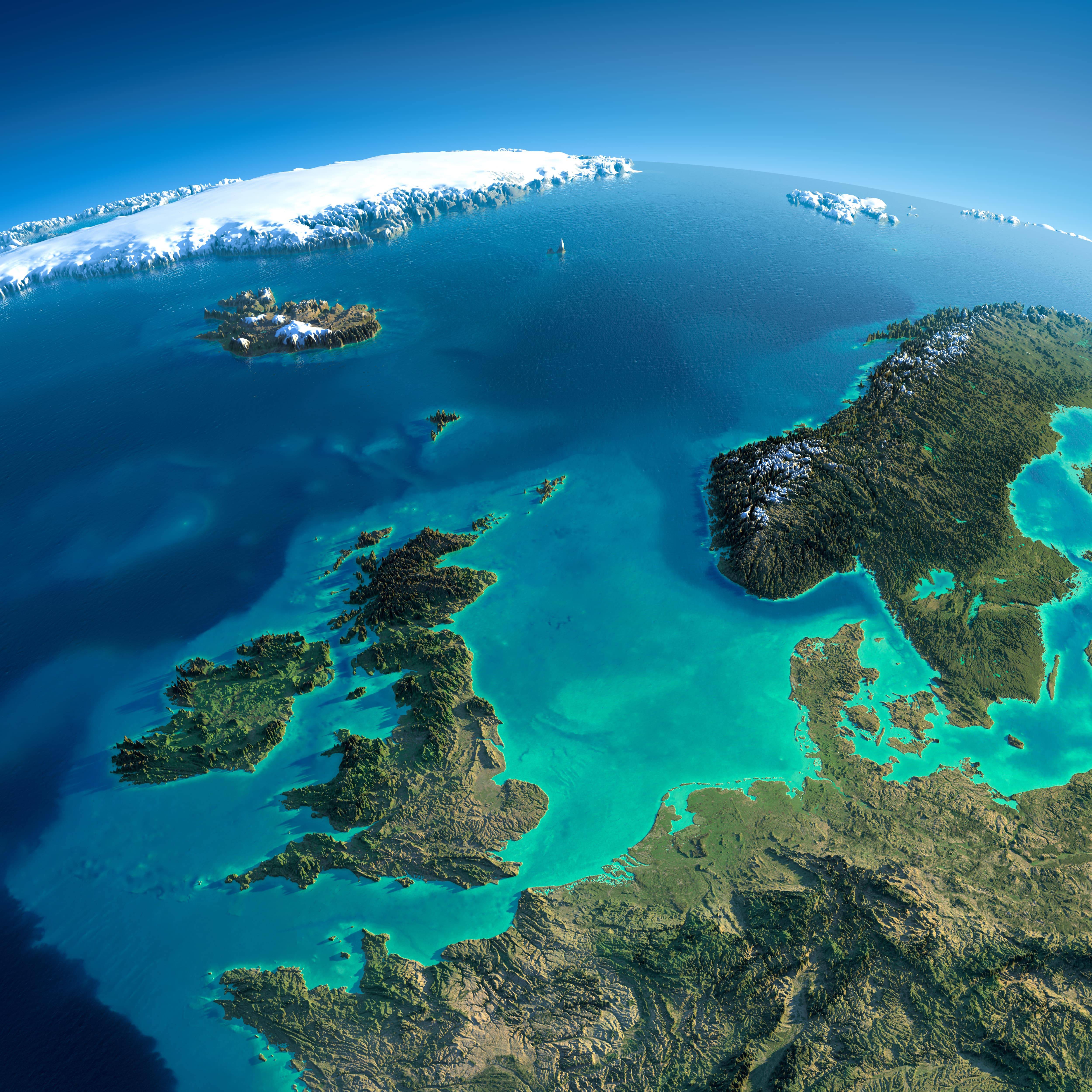
Geographically, Iceland lies at the junction of the North Atlantic and Arctic Oceans. The island is entirely in the Northern Hemisphere and just below the Arctic Circle – in fact, the Arctic Circle’s southern edge just grazes Iceland’s northernmost island, Grímsey, off Iceland’s north coast. This means almost all of Iceland’s land area is south of the Arctic Circle, giving it surprisingly moderate weather for its latitude (see our weather guide). Iceland’s latitude ranges from about 63°N to 66°N, and longitude from 25°W to 13°W, placing it just south of the Arctic Circle and about halfway between North America and mainland Europe.
Iceland is roughly equidistant between continents. It lies far out in the Atlantic, northwest of the British Isles. Notably, Greenland (part of North America) is Iceland’s nearest neighbor, only about 290 km (180 miles) to the west across the Denmark Strait. To the southeast, the Faroe Islands (a Danish territory) are about 420 km away. Further southeast are the northern islands of Britain – the Shetland and Orkney Islands (~740–750 km away) – and then Scotland itself, about 750 km (470 miles) to the southeast. The nearest point of Continental Europe is Norway, roughly 970 km (600 miles) to the east. By contrast, mainland North America (Labrador, Canada) is much farther – about 2,070 km (1,285 miles) to the west. These distances highlight Iceland’s remote oceanic location. Despite this isolation, Iceland is usually included in the European continent for practical and historical reasons.
Iceland’s main island has an area of about 103,000 km² (39,768 sq mi), making it the world’s 18th largest island and Europe’s second-largest island (after Great Britain). The country has no land borders at all – it is completely surrounded by ocean. Its coastline, carved by numerous fjords, stretches nearly 5,000 km in length. The terrain is rugged and volcanic, with icefields and mountains in the interior and fertile lowlands along some coasts.
Iceland is part of Europe, not North America. Culturally, historically, and politically, Iceland has always been aligned with Europe. It was settled by Norse Vikings from Scandinavia in the 9th century and for centuries was ruled by Norway and then Denmark, gaining independence as a sovereign nation in 1944. Today, Iceland is one of the Nordic countries and a member of organizations like NATO and the European Economic Area (EEA), which connects it economically to the European Union (although Iceland is not an EU member). It also participates in the Schengen Area for free travel in Europe. Iceland’s language (Icelandic) is a North Germanic language closely related to Norwegian and Danish, further underscoring its European heritage. In short, by geography, culture, and politics, Iceland belongs to Europe.
So why the confusion about continents? The confusion arises because geologically Iceland sits atop the Mid-Atlantic Ridge, the undersea mountain chain that separates the North American and Eurasian tectonic plates. The ridge literally runs through Iceland, meaning the island’s bedrock is split between the North American Plate and the Eurasian Plate. In places like Þingvellir National Park, you can even see the plate boundary and walk between North America and Europe – a unique experience Iceland offers. This leads some to wonder if part of Iceland is in North America.
However, in terms of continental definition, tectonic plates alone do not determine continents. Continents are usually defined by geography and cultural/historical ties rather than geology alone. Despite straddling the plates, Iceland is not considered to be “on two continents.” It is universally classed as part of the European continent (specifically, part of Northern Europe). As the Encyclopædia Britannica notes, Iceland may be physically isolated (about 800 km from Scotland, its nearest European neighbor), yet it “has remained throughout its history very much a part of European civilization”. Even though geologically a bit of Iceland extends toward North America, politically and culturally it is European. In practical terms, Iceland is a European nation and not part of North America in any conventional sense.
It’s worth noting that Iceland is one of only a few countries located entirely on oceanic islands not connected to a continent (others include nations like Japan or New Zealand). But politically, Iceland is grouped with Europe.
In summary: Iceland is in Europe. The fact that it sits astride a plate boundary is a geological curiosity, but it doesn’t make Iceland transcontinental in the way that, say, Turkey or Russia (which span continental boundaries) are. Iceland is often included in maps and lists of Europe, and its affiliations are firmly European.
Iceland’s history is marked by remarkable discovery, settlement, and the gradual development of a unique national identity.
The earliest references to Iceland appear in classical and medieval literature as “Thule,” a mysterious northern land. The island remained unknown to mainland Europeans until the late 9th century, when Norse explorers began to arrive.
The first permanent settler was Ingólfur Arnarson, who arrived from Norway in 874 AD with his family and followers. He established his homestead in what is now Reykjavík, laying the foundation for ongoing Norse settlement.
Icelandic society quickly developed its own structures. In 930 AD, the Althing (Alþingi) was founded at Thingvellir National Park, making it one of the world’s oldest parliaments and a symbol of early self-governance.
For centuries, Iceland fell under Norwegian and later Danish control. Despite foreign rule, Icelanders maintained a distinct language and culture. The country gradually gained more autonomy, achieving home rule in 1904 and full independence as a republic in 1944.
Iceland is world-famous for its stunning natural wonders and contrasts – so much so that it is aptly nicknamed the “Land of Fire and Ice.” This nickname reflects the presence of both active volcanoes and massive glaciers in Iceland. Few places on Earth have such a remarkable combination of geothermal activity and ice. Here are some of the key things Iceland is known for:
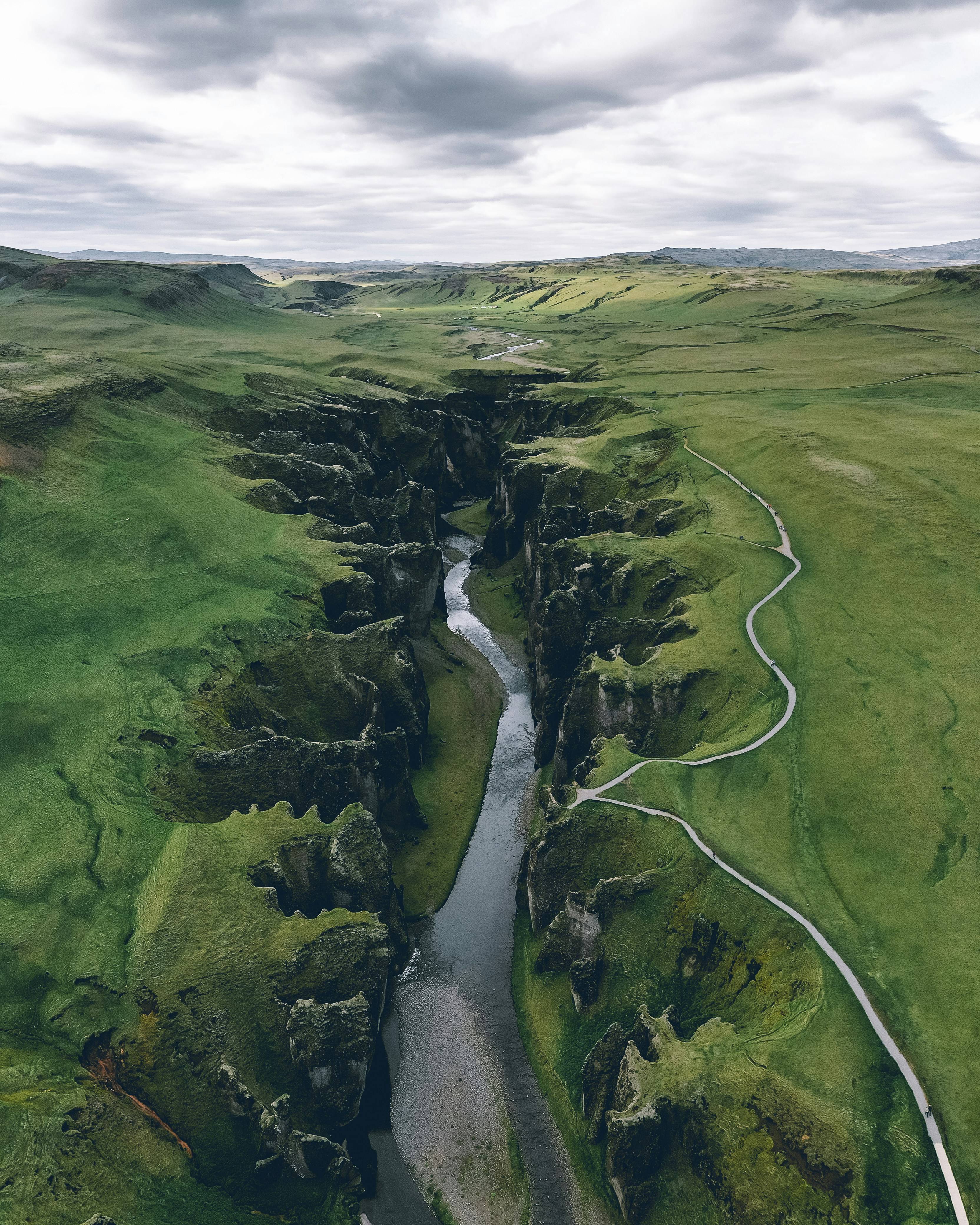
Iceland is a country full of surprises beyond its dramatic landscapes. Here are some fascinating and quirky facts that highlight what makes Iceland truly unique:
These facts only scratch the surface of what makes Iceland extraordinary, offering a glimpse into a society shaped by both its environment and its inventive spirit.
Travelers to Iceland can immerse themselves in these natural wonders through a wide range of activities:
Tips for Planning Your Iceland Adventure: Prepare for changing weather, prioritize safety, and book popular tours in advance to make the most of your trip.
Iceland’s fame comes largely from its unparalleled natural environment – volcanoes, glaciers, geysers, waterfalls, hot springs, and northern lights – which combined have created a booming tourism industry. It’s a place where fire meets ice, and that unique combination captures the world’s imagination. Iceland consistently ranks among the top travel destinations for those seeking natural beauty and adventure.
Iceland is considered part of Europe. Geographically and culturally, it belongs to Northern Europe. While a portion of Iceland sits on the North American tectonic plate, this geological fact does not change its continental classification – in terms of politics, history, and culture, Iceland is a European nation. It has strong Nordic ties and has always been linked to Europe, not to North America.
Iceland does not belong to any other country – it is a fully sovereign independent country. Historically, Iceland was under the Norwegian and later the Danish crown, but it became an independent republic in 1944. Today, the Republic of Iceland governs itself with its own parliament (the Althing, one of the world’s oldest parliaments) and government. It is not part of the United Kingdom, nor part of any other kingdom or state (though it is a member of international organizations like the UN, NATO, etc.). In short, Iceland is its own country.
No, Iceland is not an EU member state. However, it maintains very close relations with the EU. Iceland is part of the European Economic Area (EEA), which means it participates in the EU’s single market (free movement of goods, people, services, and capital) without being an EU member. It is also in the Schengen Area, which allows passport-free travel across many European countries. Iceland has considered EU membership in the past but as of 2025 has not joined the European Union. Its citizens, however, enjoy many of the benefits of EU integration via the EEA agreement.
Not in the usual sense. Iceland is often said to sit “between” two continents, but this is speaking geologically, not politically. The island lies atop the Mid-Atlantic Ridge, and parts of it are on the North American tectonic plate while parts are on the Eurasian plate. You can even visit sites in Iceland where the plates are pulling apart. However, continents are defined by geographic and cultural boundaries, not plate tectonics alone. By that definition, Iceland is entirely in one continent: Europe. It is not considered transcontinental. The geological straddle is a fun fact but doesn’t make Iceland a two-continent country. So, while Iceland bridges the gap between North America and Europe in the ocean, it is classified as a European island country. (A similar example: Hawaii sits on the Pacific plate far from any continent, but it’s considered part of North America politically.)
Iceland lies in the North Atlantic Ocean, near the spot where it meets the Arctic Ocean. In fact, Iceland is often described as being at the confluence of the North Atlantic and Arctic Oceans. To its north and northwest is the Greenland Sea (an arm of the Arctic Ocean), and to its south and west is the open Atlantic. The surrounding seas include the Denmark Strait (between Iceland and Greenland) and the Norwegian Sea (to the northeast toward Norway). This strategic ocean location has historically made Iceland important for North Atlantic shipping and aviation routes.
Just barely. The Arctic Circle (at about 66°33′ N latitude) does not cross Iceland’s main island – it lies a fraction of a degree north of Iceland’s northern coast. However, the small Icelandic island of Grímsey, which sits about 40 km off the north coast, is bisected by the Arctic Circle line. Grímsey is the only part of Iceland that technically lies within the Arctic Circle. There, on the summer solstice, the sun doesn’t set at midnight. The rest of Iceland is south of the Arctic Circle, which is why Iceland has a milder climate than true Arctic regions and experiences a few hours of winter daylight (unlike places at or above the Arctic Circle that have polar night). So, unless you visit Grímsey, you’re not quite in the Arctic Circle when in Iceland – but you’re very close!
Picture the northwest corner of Europe and the North Atlantic. Iceland is a lone island in the North Atlantic Ocean, roughly midway between North America and mainland Europe. If you look at a world map or globe, find Greenland (the huge icy island northeast of Canada) and then look east across the ocean – Iceland is the sizable island between Greenland and Norway/Scotland. It’s about one-third of the way from New York to London, for example. Many maps will mark Iceland just below the Arctic Circle line. It often appears at the top center of North Atlantic maps, showing its position as the stepping stone between continents. (For reference, Iceland is slightly smaller than the U.S. state of Kentucky in area, and it’s roughly the same latitude as much of Alaska or northern Canada, but thanks to the Atlantic currents, Iceland is warmer than those regions.)
Reykjavik, Iceland's capital and largest city, is in the southwest of the country on the southern shore of Faxaflói Bay.
Yes, most Icelanders speak fluent English, especially in cities and tourist areas.
The Icelandic króna (ISK) is the official currency.
Iceland uses Greenwich Mean Time (GMT) year-round and does not observe daylight saving time.
Iceland is part of the Schengen Area. Citizens of many countries can visit visa-free for up to 90 days; check requirements based on your nationality.
Most visitors arrive by air via Keflavík International Airport, with direct flights from Europe and North America.


